Balancing Efficiency and Trust: Jonathan Reichental on the Structural Guardrails Needed for AI and Smart Cities
Q1. Having served as the CIO for the City of Palo Alto, you have been at the epicenter of urban innovation and smart city development. As cities deploy increasingly pervasive IoT sensors, autonomous systems, and predictive algorithms to optimize public services, how should municipal leaders draw the ethical line between administrative efficiency and the erosion of civic privacy? What does robust data governance look like at a community level?
A1. Efficiency should never come at the expense of public trust. Cities must recognize that collecting data about residents is a privilege, not an entitlement. Robust data governance begins with clear policies on what data is collected, why it’s needed, who can access it, and how long it’s retained. Transparency, accountability, privacy by design, and meaningful community engagement must be foundational.
Q2. You recently wrote about how artificial intelligence could threaten the future of science by accelerating the spread of fake research and compromised data. In an era where deepfakes and generative AI can mimic absolute authority, what responsibility do technology providers, research institutions, and platforms have to enforce digital truth? How do we build structural guardrails to preserve information integrity?
A2. The Internet democratized access to scientific knowledge, but it also created opportunities for misinformation to spread rapidly. AI now dramatically amplifies this problem by making it easier to fabricate convincing research, references, and supporting evidence at scale. As I explored in my recent Forbes article, the challenge isn’t just technological. It’s also about commercial incentives, overwhelmed peer-review systems, and publishing models that sometimes prioritize volume over quality. We need stronger verification standards, greater accountability from technology platforms and publishers, and a renewed commitment to scientific rigor. We must ensure that the technologies accelerating scientific discovery don’t simultaneously undermine our trust in science itself.
Q3. In your advisory work with Human Future, you help organizations navigate digital transformation and the Fourth Industrial Revolution, while also noting that the overwhelming pace of AI demands is taking a toll on business leaders. When market forces demand extreme speed and immediate deployment, how can executives resist cutting corners on safety, bias mitigation, and long-term ethical implications?
A3. The pressure on business leaders to deliver immediate results from AI is enormous, often creating anxiety and encouraging short-term thinking. But speed without responsibility can introduce risks that ultimately undermine the very value organizations hope to create. Executives must recognize that ethical AI isn’t an obstacle to innovation; it’s an essential ingredient of sustainable success. This means embedding governance into decision-making, establishing clear accountability, and evaluating risks before deployment rather than after problems emerge. Responsible leadership requires the courage to slow down when necessary and recognize that long-term trust is often just as important as short-term performance.
Q4. Beyond AI, you track bleeding-edge frontiers like quantum computing and molecular data centers utilizing synthetic DNA. Historically, technology outpaces the regulatory frameworks meant to govern it. How can we proactively architect ethical oversight for technologies that are growing way faster than their talent pipelines, ensuring we don’t repeat the late-stage regulatory scrambles we are currently experiencing with social media and LLMs?
A4. One of the biggest mistakes we make with emerging technologies is waiting until widespread adoption before seriously considering their ethical implications. By then, many of the risks are deeply embedded and difficult to reverse. We need to move from reactive regulation to anticipatory governance, bringing together technologists, policymakers, ethicists, industry leaders, and the public much earlier in the innovation process. This also requires investing in multidisciplinary talent that understands both the opportunities and societal consequences of new technologies. We must build ethical thinking into innovation from the beginning, rather than treating it as a problem to solve after the technology has arrived.
Q5. As an educator at the University of San Francisco and a creator of highly popular LinkedIn Learning courses, you reach millions of learners worldwide. Technology ethics is often treated as an elective or an afterthought in technical curricula. How should we reshape engineering and business education so that ethical consequence analysis is treated as a core skill rather than a compliance checklist?
A5. Technology ethics must become a foundational competency for everyone involved in designing, deploying, and managing technology, not simply a specialized subject or compliance exercise. We need to integrate ethical reasoning throughout engineering and business education, using real-world cases that challenge students to consider the human consequences of their decisions. This means teaching future leaders to ask not just whether something is technically possible or commercially viable, but whether it should be done and who might be harmed.
Q6 . Your career is dedicated to analyzing, speaking about, and predicting the hyper-connected “Human Future.” On a deeply personal level, how do you manage your own relationship with technology to ensure it serves your humanity rather than consuming it? Are there any non-negotiable analog habits or tech-free routines you maintain in your daily life to stay grounded?
A6. I’ve spent much of my career exploring how technology is transforming our world, but I’ve also come to appreciate that not every moment of life needs to be optimized or digitized. I believe technology should expand our human potential, not diminish the experiences that make us human. I make time for physical exercise, walking, reflection, and meaningful face-to-face conversations. These activities help me maintain perspective in an increasingly connected world.
Q7. Anything else you wish to add?
A7. As technology becomes increasingly central to every aspect of our lives, ethical leadership is no longer optional. That’s why I created a Coursera specialization, Technology Ethics and Responsible Innovation, a three-course learning experience designed to help professionals understand the ethical challenges of emerging technologies and turn responsible innovation into practical action. My goal is to equip leaders at every level with the knowledge, confidence, and tools to make better technology decisions that benefit both their organizations and society. The specialization can be accessed here: https://reichental.com/coursera/technoethics
Thank you.
…………………………………………………
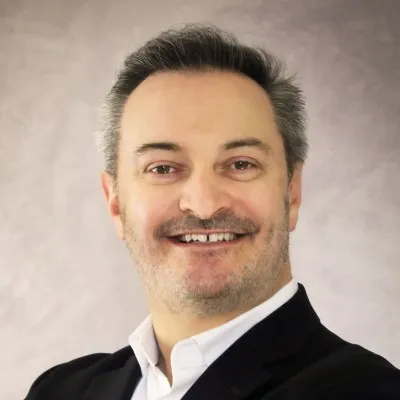
Dr. Jonathan Reichental is the founder of Human Future, a global business and technology advisory, investment, and education firm. Previous roles have included senior software engineering manager, director of technology innovation, and he has served as chief information officer at both O’Reilly Media and the City of Palo Alto, California.
In 2013 he was recognized as one of the 25 doers, dreamers, and drivers in government in America. In 2016, he was named a top influential CIO in the United States and in 2017, he was named one of the top 100 CIOs in the world. He has also won a best CIO in Silicon Valley award and a national IT leadership prize.
Reichental is a recognized global thought leader on a number of emerging trends including urban innovation, smart cities, sustainability, blockchain technology, data governance, the fourth industrial revolution, and digital transformation.
He holds several degrees including a Ph.D. in Information Systems. He is an adjunct professor in the School of Management at the University of San Francisco and instructs at several other universities. Reichental regularly creates online video courses for LinkedIn Learning.
He is a popular global keynote speaker and writer, including authoring a bestseller on the future of cities.