Inside the Mind of a MySQL Rockstar: Matthias Crauwels on Community, Culture, and Open Source First
Q1. You moved from managing databases at a Belgian university to becoming a dedicated MySQL DBA, then to consulting at Pythian, and now to supporting large enterprise customers running MySQL at scale at PlanetScale. Looking back at that trajectory, what has been the biggest shift in how you think about MySQL operations between managing it for one institution and supporting it across many large enterprise environments? What surprised you most about what “at scale” means in practice?
When I was working at the university, we built a stack around MySQL 5.7 with GTID replication, Orchestrator for high availability, and ProxySQL for intelligent query routing. High availability and disaster recovery were part of what we did, but the stakes were fundamentally different from what you encounter in a commercial or consulting environment. It was solid work, but it was one institution, one set of requirements.
What was really validating was the move to Pythian. As a consultant, I was suddenly exposed to many different stacks and technologies across a wide range of customers, and one of the most important things I learned was that the stack we had built at the university — MySQL with GTID, Orchestrator, and ProxySQL — was actually the right approach. It was best practice. I ended up traveling to conferences around the world speaking about exactly that stack.
Then came PlanetScale, and that is where the concept of scale truly expanded for me. Vitess brings sharding into the mix, and it scales beyond anything I could have ever imagined back at the university. Going from a single-institution setup to helping enterprise customers operate MySQL across sharded clusters at massive scale — that has been the biggest shift. Not just in technology, but in how you think about operations, automation, and what it means to keep things running reliably.
Q2. Being named MySQL Rockstar 2025 recognizes years of sustained community contribution, including your long-standing support of MySQL Belgian Days. What does that recognition mean to you personally, and what is the most important thing you have learned about building and sustaining a regional technical community that could be useful for other organizers or contributors?
The award was a really nice recognition of the work I have been doing over the years — speaking at conferences, helping out, and organizing MySQL Belgian Days along with the community dinner that goes with it.
MySQL Belgian Days fills an important gap. Having just a single day — or sometimes even half a day — of MySQL-related content at FOSDEM makes it harder to accommodate the breadth of speakers and content the community has to offer. Belgian Days gives us the space to do that properly: a focused event where we can go deeper and bring in stronger talks.
The community dinner is the extra touch that brings it all together. It allows all those experts to come together in a more informal setting, share ideas, and connect as people rather than just conference attendees. And obviously, being Belgian and being proud of our beer culture makes all the pieces of the puzzle fall into place. I love it when a plan comes together, as Hannibal Smith from the A-Team would say.
Q3. Looking ahead, what excites you most about the MySQL community over the next few years? Are there particular technical areas, community initiatives, or collaboration opportunities that you’re especially interested in, and how do you hope to engage with or contribute to them?
First and foremost, what excites me is the engagement from MySQL (Oracle) to switch the MySQL development model to be open source first. Moving development to GitHub will make it a lot easier for people to contribute code which is what we should aim for as an open source community. Very excited to see the first steps into that direction.
Another thing that excites me is the broader database landscape that I am now part of. At PlanetScale, we now also support PostgreSQL, and the extension system that Postgres offers is incredibly powerful. It opens up an enormous range of possibilities for users.
On the MySQL side, I have been keeping an eye on VillageSQL (villagesql.com), which seems to be heading in a similar direction — bringing extensibility to MySQL. That looks very promising to me. If MySQL can develop a strong extension or plugin ecosystem that gives users more flexibility, I think that could be a real game-changer for the community.
Q4. Supporting enterprise customers at PlanetScale means seeing many different MySQL environments across different scales and industries. What are some common operational challenges you see large organizations facing with MySQL, including areas where even experienced teams may need to adjust their approach? What usually helps them move in the right direction?
One of the biggest operational challenges I see right now is data fragmentation. Customers write a lot of data, the data files grow, and then they delete older data, which creates gaps in those files. Clearing those gaps requires table optimizations to reclaim space and rebuild indexes — and that is not a trivial operation. These operations benefit from careful planning, testing, and repeatable workflows, especially in large production environments.
The good news is that PlanetScale and Vitess have solid automation for rebuilding tables and optimizing this process, which helps a lot. But fragmentation management remains something that teams need to be aware of and plan for. It is similar in spirit to the vacuuming challenges that PostgreSQL administrators deal with — different mechanism, same category of operational concern that you simply cannot ignore.
Q5. MySQL is moving toward a more open, GitHub-centered, community-driven development model. From your perspective as both a long-time community organizer and someone deeply involved in enterprise MySQL operations, why does that shift matter now? What has changed in how enterprises run MySQL that makes open community collaboration more important today than it was five or ten years ago?
This shift sounds very promising. GitHub is the de facto workflow for modern software projects — it is how developers collaborate, review code, and contribute today. It seems only logical that MySQL, as an open source project, aligns with the workflows developers commonly use today and adopts that same model.
Hopefully, this will make it significantly easier for community members to contribute code back to MySQL. Lowering the barrier to contribution is one of the most impactful things you can do for an open source project, and adopting the tools and workflows that developers already use every day is the right way to do it.
Q6. You have spent years on both sides of the MySQL relationship — inside an organization running it in production, and now supporting other organizations operating MySQL at much greater scale. If you could improve one thing about how the broader MySQL ecosystem — vendors, Oracle, the community, and tooling — supports practitioners running MySQL in production, what would it be and why?
More collaboration between the different projects in the ecosystem. I think that if the various players — vendors, community projects, tooling authors — would work more closely together and think and execute in the same direction, it would benefit the entire community in the long run.
It is maybe a bit of a utopian dream, but I genuinely believe that alignment and collaboration across the ecosystem would produce better outcomes for everyone. And hey — dreaming is certainly allowed.
Qx. Is there anything else you would like to add?
I hope that MySQL Belgian Days can continue and I am ready to set up the community dinner again and welcome the community for some good food and good drinks. That is what community is about — showing up, bringing people together, and making sure the conversation keeps going.
……………………………………
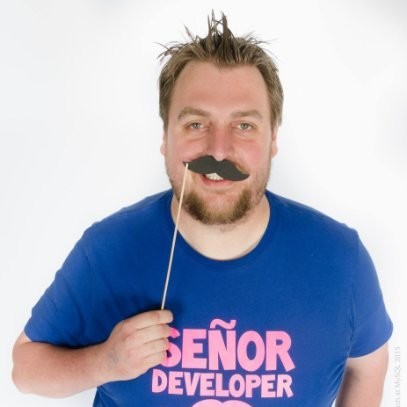
Matthias Crauwels is an experienced database expert and Enterprise Customer Engineer at PlanetScale, where he has been helping large enterprise customers scale, shard, and migrate MySQL databases using Vitess since November 2022. His passion for computers began at the early age of 10.
Sponsored by MySQL/Oracle.