Data Orchestration at the Edge: How a Nurse-Founder Built an Operating System for the Last Mile of Care
Data Orchestration at the Edge: How Cindy Bauer Is Architecting Interoperable, Cloud-Native Mobile Healthcare Delivery at Coordinista, a nurse-founded and led, next-generation, cloud-based field management system for mobile healthcare teams.
Q1. Coordinista achieved a 95% reduction in system integration times by utilizing InterSystems IRIS for Health™. From a database architecture standpoint, healthcare integrations are notoriously plagued by rigid HL7 v2/v3 legacy payloads and complex FHIR translations. What specific bottlenecks within your data pipelines did InterSystems’ cloud-first data platform resolve, and how did it change your backend storage and transformation strategy to achieve this level of speed-to-market?
A1 – One of our first integration challenges wasn’t HL7 or FHIR, but something surprisingly common in healthcare: ingesting large volumes of patient data from CSV files. For an enterprise health plan deployment, we needed to process more than 5,000 patient records. InterSystems IRIS for Health provided the logging, message persistence, and error handling to process those records reliably, identify exceptions, and continue processing without disrupting the entire workflow.
That same infrastructure has been used to support our standards-based interoperability, including our athenahealth FHIR integration. Rather than repeatedly building custom data pipelines, we can focus on mapping and transforming incoming data into actionable workflows within Coordinista. This has significantly accelerated our integration development and client onboarding.
Q2. Your platform natively supports centralized (dispatch), decentralized (self-scheduled), and hybrid mobile operational models. In a hybrid field deployment, data states change rapidly and unpredictably from both edge nodes and central command. How do you handle schema flexibility, state synchronization, and transaction isolation levels across the Coordinista Console and mobile apps to prevent data drift or write conflicts when calendars are dynamically optimized?
A2 – Coordinista was designed to support centralized dispatch, decentralized clinician self-scheduling, and hybrid deployment models within the same architecture. Each client operates within a separate database for data isolation, while a stable underlying schema supports flexible workflows without frequent structural changes. Our Admin Console and native mobile applications access current operational data through shared backend services, providing coordinated visibility into patient assignments, schedules, and field activity.
Built-in, role-based guardrails help maintain operational integrity by preventing double-booking, restricting assignments to clinicians authorized for the patient’s associated programs and services, and limiting scheduling to clinician-defined availability. When scheduling errors arise, descriptive notifications enable administrative review and resolution. While advanced automated conflict resolution remains an area for future enhancement, human oversight is intentional in situations requiring clinical or patient-centered judgment. Our philosophy is that care delivery can be decentralized without sacrificing centralized operational visibility, allowing organizations to deploy teams according to their needs rather than conforming to a prescribed operating model. Our architecture reflects that distinction, balancing decentralized flexibility, centralized visibility, and human-centered decision-making.
Q3. The Coordinista Mobile App is highly transactional—handling real-time mileage logs, automated route planning, and Electronic Visit Verification (EVV) data.
To minimize clinical burnout, your front-end must remain completely frictionless. Behind the scenes, what data ingestion architectures (e.g., event-driven streams, local caching, batch syncing) do you implement to ensure mobile performance isn’t throttled by high-latency or disconnected field environments?
A3 – As a nurse who has worked in the field, I knew our mobile application had to be intuitive, lightweight, secure, and designed around the clinician’s workflow. Rather than relying on a mobile-responsive web application, we built native iOS and Android applications that retrieve only the information needed for the task at hand. This selective approach to data retrieval and local storage was intentional, balancing performance and security by minimizing sensitive patient information retained on devices. All data is encrypted in transit and at rest, with additional safeguards including two-factor authentication, automatic session timeouts, and screenshot restrictions on screens containing patient information.
We also designed for the interruptions inevitable in field care. The application preserves in-progress documentation and service information locally, allowing clinicians to close and restart the app and resume where they left off. Mileage data is stored locally and automatically synchronized when connectivity returns. For visit information that hasn’t been successfully saved, the application provides visibility so clinicians can resubmit it once connected. We use geolocation rather than geofencing for field activity and visit verification. Our guiding principle is that technology should adapt to the realities of patient care, reducing administrative burden while protecting sensitive information.
Q4. The Admin Console extracts multi-dimensional telemetry from the field, including raw latitude/longitude logs, service duration metrics, and ADT messaging. For database engineers, aggregating and querying this unstructured or semi-structured temporal-spatial data can scale poorly. How is your data tier structured to convert these high-velocity field data points into low-latency, analytical workloads that power your audit-ready reporting and operational dashboards?
A4 – Most of Coordinista’s operational data is structured at the point of collection, including patient assignments, service status, visit duration, timestamps, and geographic coordinates. Our backend uses PostgreSQL with Entity Framework Core (EF Core), with indexed queries supporting efficient retrieval of operational records. As clinicians complete services, document attempts, or reschedule visits, through the mobile app, these actions are reflected in our Admin Console dashboards in near real time. This gives administrators continuous visibility into field activity, while reporting services generate PDF and Excel reports to support operational oversight and audit readiness.
We also translate ADT (admission, discharge, and transfer) data into actionable notifications delivered directly to assigned clinicians’ mobile apps, including relevant event details such as timing, location, and patient condition. For computationally intensive scheduling and route optimization, geographic radius-based lookups help narrow calculations and improve performance. In one deployment, Coordinista supported more than 1,400 patient assessments across over 40 skilled nursing facilities in just 23 days. Unlike traditional EHRs that primarily document clinical encounters, Coordinista captures the operational activities required to make those encounters happen, turning field data into timely intelligence that helps teams respond faster and deliver care more effectively.
Q5. ODBMS readers closely track data fabric architectures and AI data readiness. With platforms like InterSystems heavily expanding built-in vector capabilities, generative AI gateways, and real-time FHIR pipelines, how is Coordinista formatting its core data repositories today to prepare for downstream predictive routing, clinical acuity forecasting, and agentic workflows at scale?
A5 – We are intentionally building an AI-ready foundation by structuring data around the relationships between patients, clinicians, services, geography, scheduling, and operational outcomes. Today, we use defined data mappings, validation rules, and workflows to maintain consistent, usable information across our platform. Our reporting capabilities allow organizations to query historical operational data, filter activity across time periods, and analyze service attempts, completions, clinician productivity, and other performance metrics. Through our interoperability architecture with InterSystems IRIS for Health, we can bring clinical information together with the operational intelligence captured in the field.
Our longer-term vision is to leverage this longitudinal data to anticipate patient needs, forecast team capacity, and optimize field deployment even further. While predictive AI and agentic workflows are not yet deployed, we see opportunities to apply them selectively where they can meaningfully improve care delivery. We believe AI should solve real operational problems, not simply be added as a feature. The opportunity is to combine interoperable clinical data with real-world operational intelligence to continuously improve how care reaches patients.
Q6. Building a tech company in a domain bounded by legacy infrastructure, data silos, and strict compliance frameworks is incredibly difficult. As a founder, what has been your biggest personal lesson in navigating the rigid realities of enterprise healthcare systems, and what tech stack breakthrough finally made you realize you had successfully turned ‘chaos into coordination’?
A6 – One of my biggest lessons has been that healthcare’s greatest technology challenges are often operational rather than clinical. We recognized early that interoperability would be essential, but we didn’t fully anticipate how significant a competitive advantage it would become.
In mobile healthcare, exchanging orders and documentation through fax, encrypted email, and PDFs remains common, creating manual work and delays in care. Our clients are discovering that connecting electronically with their referral partners not only improves efficiency but also strengthens their competitive position. InterSystems IRIS for Health has helped us make those connections faster and more scalable.
For me, the breakthrough was recognizing the tremendous value of operational data in understanding and improving care delivery, and how much of that intelligence is lost across the industry through manual processes and siloed systems. Interoperability isn’t simply about exchanging data; it’s about turning that data into coordinated, actionable intelligence. That’s what we’re building with Coordinista: an operating system for the last mile of care that empowers decentralized teams to deliver care efficiently while giving organizations the centralized visibility and insights needed to continuously improve how care reaches patients.
………………………………………………………………..
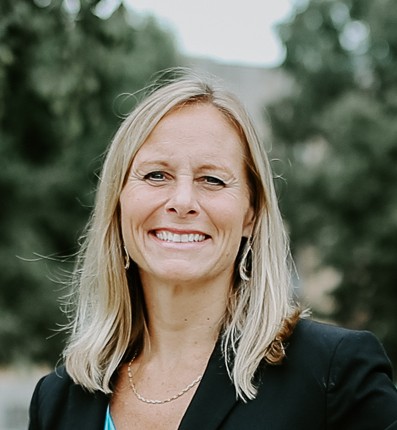
Cindy Bauer is founder and CEO of Coordinista, with 18 years of experience delivering care to complex healthcare populations, specializing in resource deployment, care innovation, and technology-enabled, field-based care delivery. She is an accomplished and proven leader, having demonstrated resilience, ability to pivot, and implementation of tactical strategies to reach objectives. Cindy has:
- Developed innovative mobile care delivery and management software for markets serving high-risk populations.
- Led initiatives that achieved a 30% reduction in hospital readmissions for an Integrated Care Organization’s dual enrolled population and successfully launched and scaled a mobile hybrid chronic disease assessment program for a Medicare Advantage complex population.
- Been recognized for organizational agility during early-stage rapid growth, diligent focus towards reaching key objectives, and distinctive ability to effectively execute under non-traditional working environments.
Sponsored by InterSystems.