Keep the Best, Transform the Rest: A Conversation with Steele Arbeeny on Enterprise Data Modernization
Q1. Enterprise ERP modernization has been on the agenda for decades, yet many organizations still struggle with legacy complexity. What are the most common reasons large enterprises find themselves stuck — and what are the hardest lessons you have learned from helping them get unstuck?
Several factors impede organizations’ progress on modernization, especially in larger, more mature enterprises. These challenges can be both internal and external, meaning they exist within systems as well as across multiple systems. Over the past decade, many organizations have grown through a series of mergers and acquisitions, whether by diversifying, acquiring competitors, or expanding across the supply chain. In each case, the acquired company’s systems are added to the existing IT environment. This creates a highly fragmented landscape with “one of everything”, which then increases complexity in daily operations and makes modernization more difficult. Even upgrading each system to its latest version only does so much in simplifying the landscape and can contribute to more complexity. A fragmented system also limits AI adoption. When data is spread across multiple systems with different structures and attributes, it becomes difficult to train models that accurately reflect how the business operates today.
Customization presents another internal challenge. Many systems are unnecessarily over-customized, often for reasons that were well intentioned and valid at the time. As the functionality of standard software capabilities have improved, many of these customizations are no longer necessary, yet still remain. While some customizations continue to be essential and enable key competitive differentiators, others should really be retired. Aligning more closely with standard software reduces complexity, simplifies upgrades, and lowers testing and support costs.
Finally, organizations often retain large volumes of data in production systems that are no longer required for day-to-day operations. While this data may need to be preserved for audit or compliance purposes, it does not need to be carried through modernization efforts. Retaining outdated data in active systems increases complexity and can negatively impact AI initiatives, as models may be trained on information that no longer reflects how the current business operates.
Q2. Mergers, acquisitions, and cloud migrations are often the forcing function for data modernization. After 15,000+ projects, what are the two or three challenges that keep coming up regardless of industry or company size — and what has surprised you most about how organizations handle them?
In some cases, M&A can drive modernization, particularly on the merger side, while divestitures tend to follow a different path. The seller’s priority is often to transfer the data to the buyer as quickly as possible and exit. The buyer, on the other hand, may choose to operate the acquired business as is for a period of time before integrating it into a broader modernization strategy, but these are often separate initiatives.
The challenges in M&A vary depending on whether the organization is the buyer or the seller. For the seller, one of the most difficult tasks is defining the scope of the data being transferred. This may be based on a legal entity, a location, a product line, or a combination of these factors. That definition directly influences project complexity, cost, and timeline, and requires alignment across multiple departments. Speed is also a key priority, as sellers want to complete the transaction quickly and reallocate their most expensive resources – their people – to more strategic priorities.
On the buyer side, the challenges center on integration strategy. Organizations must determine whether to merge operations, adopt one company’s processes, or implement a hybrid approach. These decisions carry significant risk, as a poor choice can disrupt operations and destroy the expected value of the transaction. Delays in execution further limit the ability to capture that value. In some cases, companies take the simplest path and keep the acquired systems separate, which adds to long-term complexity and creates fragmentation. A clear strategy and defined playbook are essential to significantly improving outcomes.”
Q3. “AI-ready data” has become something of a buzzword. But in practice, what are the most significant structural and organizational barriers that prevent enterprises from actually getting there — and what does closing that gap really require?
Most enterprise data is not in a format suitable for AI – which creates an immediate disadvantage. AI models are ultimately mathematical equations and rely on large matrices of numbers, while enterprise data is typically stored in complex, normalized formats with multiple data types. Many AI models prefer formats like one-hot encoding or label encoding. Bridging that gap is the first challenge. Converting this data into usable formats is often assigned to data scientists. While this works sometimes, many lack the experience and understanding of complex enterprise data models that can encompass 40,000 data tables or more, resulting in a painful, iterative process that does not always produce a reliable data set.
This challenge is exacerbated when data exists across multiple systems and formats, requiring the endeavor to be repeated to create a universal data set that represents the needed data for your entire organization. Another common problem that plagues many AI projects is the lack of a clearly defined problem statement that is amenable to an AI solution. Broad directives to “use more AI” or “improve sales with AI” lack the specificity needed for success. Without a focused and solvable problem, AI initiatives tend to flounder and struggle to deliver meaningful results.
Q4. Data modernization projects are known for running over time, over budget, or simply not delivering the expected value. What are the most honest lessons SNP has taken from projects that didn’t go as planned — and how has that shaped the way you approach these engagements today?
Every project that does not go as planned reinforces the same lesson, which is that assumptions create risk and complexity. Whether it is underestimating customization, overestimating data quality, or assuming timelines can be compressed without changing the approach, these gaps show up during execution. The most balanced approach seeks modernization without reinvention. Full reinvention is a costly, time-consuming, and often unnecessary path that can take 10 years or more. Many existing processes continue to work well and should be preserved.
What has shaped my approach is the understanding that we don’t modernize data or systems; we modernize a business. This means ensuring that all the essential operations of the past are able to be done seamlessly after the modernization takes place. Our guiding principle is simple: keep the best and transform the rest. Data migrations can vary widely, but they follow a defined process with clear steps, validation points, and traceability throughout. Additionally, we emphasize the need for preparing and cleaning data ahead of major transformations – especially through smaller, targeted improvements so organizations are not trying to do everything all at once. When these steps are followed, outcomes become far more predictable.
Q5. As SNP expands in North America, what are the most striking differences you are seeing in how North American enterprises think about ERP modernization and data architecture compared to their European counterparts — and where do you see the biggest blind spots?
It might be an oversimplification to frame this purely as North America versus Europe. In both markets, there are organizations that want to move quickly to adopt new technologies, and organizations that are heavily customized, regulated, and progress more slowly. Treating each region as a single, consistent block can be misleading. That said, European organizations are generally more likely to adopt vendor recommendations quicker than their U.S. counterparts. Working closely with a partner helps streamline modernization efforts, as vendors often encourage upgrades and standardization. In contrast, it’s common to find U.S. organizations operating on older versions with less urgency to modernize, which can increase complexity and slow progress.
……………………………………………………….
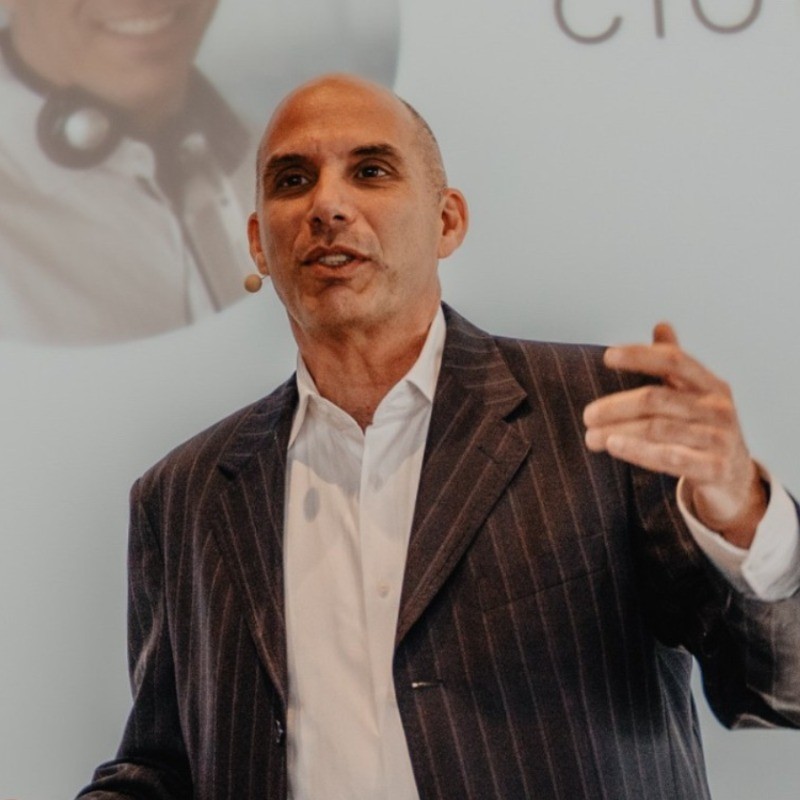
Dr. Steele G. Arbeeny is the North American CTO of SNP Group and the architect of numerous mission-critical systems across multiple industries that are adopted by Fortune 500 companies globally. His primary focus at SNP is the architecture, design and AI-augmentation of SNP’s new and existing software products. Steele holds patents in digital speech processing and securities trading and is a member of the IEEE and ACM. He has keynoted worldwide and is an industry expert in SAP digital transformation. Steele earned his PhD in computer engineering from Rutgers University.