

Leaving the Bubble: Oliver Günther on Universities, Democracy, GenAI, and What Public Higher Education Owes Society
“As a university president, one asks oneself every day: What can universities contribute to solving today’s global problems? Their financial and staff resources may be limited, but they have the power of the word and the mind. Through their teaching, they ensure that future generations can deal with complex challenges in a reflective way — thanks to the culture of debate and the ability to critically analyze what they have learned during their studies. After all, it is one of our most noble tasks as university leaders to impart optimism to students, to teach them history, to demonstrate to them that there are alternatives to violence and populism, and, thus, to show them the way to a better future.” Oliver Günther, Die diverse Universität (The Diverse University)
Q1. Your book Die diverse Universität (The Diverse University) opens with a question you say has occupied you since your student days in the early 1980s: why do societies invest in universities, and what do they get in return? That question felt abstract for decades — and then it became urgent. In the German interview you gave last year, you described how the Hamas attack on Israel, the war in Ukraine, and the rise of populism across Europe and the United States converged to make you realize that much of what seemed permanent — democracy, peace, academic freedom — can no longer be taken for granted. What shifted in your own thinking between the university president who held these questions as a longstanding personal interest and the one who decided the moment had come to write this book?
Oliver Günther: That is a very complex question but let me try to answer this succinctly. I – as many of your readers – grew up in a free democracy as a matter of course. There was freedom of speech, freedom of thought, and freedom of science. That has changed now. Hungary and Poland had populist right-wing governments for many years, with very negative effects on the democratic structures there.
Russia invaded Ukraine, the conflict between Israel and Palestine seems to be going nowhere, the US became a kleptrocracy. Who would have thought all of that even ten years ago?! In such a situation, I find it extremely important for universities and their leaderships to rise and address these challenges. Universities are a crucial pillar of open democracies. That is why we have an obligation to defend the freedoms we have. And the best means to do that are our research, our teaching, and our writing.
Q2. You argue in your book that universities have inadvertently created a new kind of ivory tower — not the old one built on elitism and exclusivity, but one built on a narrowed public discourse in which topics like gendering and wokeness dominate academic debate while large parts of society feel left behind or actively alienated. That is a courageous self-criticism from a university president. How did you arrive at that conclusion, and what does it actually look like from inside a university leadership role when you sense that the institution you lead has drifted away from the society that funds it and depends on it?
Oliver Günther: I have always done my best to promote diversity and freedom of thought in the institutions I have been with. As a student at Berkeley I co-created a seminar “Social Implications of Computing”. Many of my professors and fellow students found this a waste of time at best. I am still very sympathetic to the agenda that is summarized by the term “woke” (well knowing that the definitions of this term now vary widely between different groups). But at the same time, we have to focus on our core mission as universities: excellent research, effective teaching, and active transfer. Transfer is important, in the sense of transfer into society. That means in particular that we should never tire to explain to the general public what we do and why we do it. Harvard is a prime example of a university that has failed utterly in this respect. We have to make sure that that doesn’t happen here in Europe. And the best way to do it is to focus on great research and teaching, as well as an effective exchange with the general public.
Q3. You are currently writing the English version of the book — which means bringing an argument originally grounded in the German university system to an international audience that includes American, British, and global readers, at a moment when academic freedom and university autonomy are facing particularly severe tests in the United States. What do you want the English version to say to an American academic leader or policymaker that the German version could not fully anticipate — and how has your thinking about the book’s central argument evolved as you have watched what has been happening across the Atlantic?
Oliver Günther: Well, I just mentioned Harvard. There has always been a lot of great research and teaching at Harvard. But the general American public got the impression that all they think about in Cambridge is unisex toilets and gendering. That is nonsense, of course, but it led the university into its biggest crisis ever. At the moment, the situation in the US is abysmal. Their current administration is about to destroy one of the biggest assets of their nation – a fantastic system of research universities. This will have long-term repercussions. We already see that the brightest young minds from Africa, South America, India, and the Arabic countries do not want to go to the US anymore for their Master or PhD. They prefer to go to Europe instead. They feel more welcome there, the quality of the research and teaching is essentially the same, and tuition fees are much lower than in the US and in the UK. (In Germany, actually, many great universities do not charge any tuition.) I certainly do not feel any Schadenfreude but this will certainly not help the US in the long term. In my book “The Diverse University,” I analyze the situation universities are in right now – both in the US and in Europe – and I make some suggestions how to change – always with the objective to contribute as much as possible to the common good.
Q4. You draw a direct line from scientific research to democratic stability — citing the COVID-19 vaccine developed out of a Deutsche Forschungsgemeinschaft project at Mainz as an example of how universities can deliver extraordinary public value under pressure, and in a remarkably short time. Yet that same pandemic also showed how quickly scientific authority can be contested, how easily misinformation spreads, and how difficult it is for universities to communicate complex, uncertain findings to a public that wants simple answers. What did the pandemic experience teach you about the communication gap between universities and society — and what has the university community failed to learn from it?
Oliver Günther: In recent years, universities have increasingly been in the public eye. A priori, that seems like a good thing. However, social media has also changed the rules of the game for scientific institutions. For example, the threat posed by Covid-19 saw many politicians and regular citizens turning to science for advice. This was flattering for us scientists, but it also led to an increase in visibility and social responsibility that large sections of the scientific community were not used to. In the course of this debate, it became clear to many citizens that science does not always know everything.
We may know that the earth is round and the moon is a satellite of the earth, but at the beginning of the pandemic, we did not know exactly what the coronavirus does to us humans and how it spreads. Of course, science cannot answer all questions with absolute certainty. Rather, there are many areas where there are majority and minority opinions, as well as ongoing discussions: namely, wherever research takes place, i.e., at the boundaries of proven knowledge. This is completely normal from a science point of view, but the public often misinterprets and misunderstands the contentious discourse inherent to science. We scientists must live up to this communicative challenge, as this is the only way to ensure that science can continue to be regarded as a credible authority. In retrospect, science has not done so badly, even in those difficult times of pandemic and mass hysteria. Quite the contrary: Science has done well. Nevertheless, it is now more important than ever to continuously communicate to the public what science and universities are all about: serving the common good.
Q5. Generative AI is arriving in universities simultaneously from multiple directions — students using it for essays and assignments, researchers using it for literature review and data analysis, administrators exploring it for institutional processes, and national governments debating how to regulate it. From your position as president of a major research university, what is your honest assessment of how German and European universities are currently responding to GenAI — are they engaging with it seriously and courageously, or are they mostly reacting defensively and hoping the disruption passes?
And beyond the diagnosis: what concrete recommendations would you make to university leaders, policymakers, and faculty about the actions that need to be taken now to ensure a mindful, responsible, and educationally sound use of GenAI in higher education — one that harnesses its genuine potential without sacrificing the deeper purposes that universities exist to serve?
Oliver Günther: Our M.I.T. colleague Anant Agarwal said at a panel discussion in Kyoto in 2023: “AI in education is going to be very big. But at the universities I don’t see much happening yet.”[1] Since then, we have seen some major changes in both public and private universities. The role of take-home papers and exams is increasingly being questioned. Admissions are based no longer on submitted essays alone. The tailoring of one’s teaching to specific students and the use of large language models, such as ChatGPT, has become quite common. More and more universities integrate a responsible use of AI into their teaching and examination routines. After all, AI is here to stay and our students need to understand how to use the available tools best to achieve their professional goals.
Already, adaptive learning empowers us to do more justice to the diversity of students. AI-supported tools help to record the performance, talents, and motivation of individual students and to offer them personalized learning content based on this analysis. This is almost equivalent to a personal tutor for each student. Such targeted “tutoring” helps manage heterogeneity and will allow a higher proportion of students to succeed than would be the case with the usual one-size-fits-all teaching methodologies.
It is not unlikely that large language models will give rise to new cultural techniques and literacy skills that will need to be integrated into school and university curricula — techniques and skills that we need to teach our students to adequately prepare them for the challenges of the coming decades. It is safe to assume that, in the future, the majority of texts will be created by AI, at least in their initial version. Text creation will become a commodity, which naturally raises questions of intellectual property. Real-time voice-to-voice translation will also become broadly available shortly. For university teaching, it is important to not only recognize the availability of such powerful technologies, but also to help students use them efficiently and understand their limitations. With regard to large language models, this means training students in more than the formulation of queries (“prompt engineering”). We must teach them how to engage in a productive exchange with AI, including critical fact-checking.
Q6. There is a deep tension at the intersection of your book’s argument and the arrival of GenAI. Your book argues that universities must be open spaces that strengthen critical thinking, democratic participation, and the common good. GenAI can produce fluent, apparently well-reasoned text without genuine understanding, and can make it significantly easier for students to produce work that performs the appearance of learning without the substance of it. How do you think about GenAI’s impact on the thing universities are most fundamentally supposed to produce — not degrees, not publications, but citizens who can think independently and participate meaningfully in democratic life?
There is more to teaching than just imparting subject-specific content. Teaching means personality development. This also means confronting students with uncomfortable truths and with controversial views – including political views. In this respect, we can only agree with a report Yale published as early as 1974: “The history of intellectual growth and discovery clearly demonstrates the need for unfettered freedom, the right to think the unthinkable, discuss the unmentionable, and challenge the unchallengeable. […] [W]hoever deprives another of the right to state unpopular views necessarily also deprives others of the right to listen to those views.”
Q7. You describe universities as spaces where young adults develop not only professional knowledge but also as citizens of a free democracy — spaces that are essential for democratic society to reproduce itself across generations. If GenAI is increasingly capable of providing information, explanation, and even personalized instruction at scale and at low cost, what remains that only a physical university community — with its friction, its disagreements, its diversity of encounter — can provide? And is that remaining value sufficient to justify the scale of public investment that universities currently receive?
Digital tools, including of course GenAI, will remain an important element of academic education in the long term, and that is a good thing. However, face-to-face teaching and collaborative learning must remain at the forefront, in particular of undergraduate studies, as they still seem to be the best way to foster the personality development of our students. Only the physical presence on a diverse campus can provide the experience of controversial discourse and enrichment through exposure. Experiencing and debating with faculty and classmates from very different backgrounds than one’s own is an essential component of a modern education – an education that prepares our students for the complexities of our “new” world. With universities focusing on this kind of experience, tax money could hardly be better spent than on enabling many younger (and older) people to study there – at least for a short time.
Q8. You envision universities as open spaces where controversial opinions can be heard, where red lines are identified and defended, and where society’s hardest problems can be addressed without fear or suppression. What does the university of the future actually look like, in your vision — not in ten years, but in thirty? How does it differ structurally, pedagogically, and in its relationship to society from the university of today — and what would need to change in governance, in funding models, and in the culture of academic institutions to make that future possible?
In Potsdam we are currently building a new campus for our Law School and our Faculty of Economics and Social Sciences. 1,000 faculty and staff, 6,000 students. It is a wonderful opportunity – but also a challenge – to build an infrastructure for the next 100 or more years of university life. The architecture is based on the principles I outlined above. We believe in physical presence. That’s why we need to make this space attractive. Students and faculty alike must enjoy to spend time there – inside and outside the classroom. While focusing on physical presence, the campus must also give plenty of opportunities to use digital media – alone or in groups. This inherent hybridity of academic life is maybe the biggest difference between today and the university we knew. In Potsdam, we will also have dormitories on campus – not as many as I would have liked but better than nothing. As we know from universities in many other countries, most notably the US and the UK, the resulting campus culture has an enormous impact on the personality development a good college wants to provide their students with.
Q9. Potsdam has a particular historical and symbolic weight — the city of Sanssouci, of Frederick the Great, of the Potsdam Conference. You quoted Voltaire in your interview — “I do not share your opinion, but I would die for your right to express it” — and noted that it feels more relevant today than ever. What does leading a university in Potsdam specifically mean to you in terms of historical responsibility — and how does that place shape how you think about the university’s role in the democratic moment we are living through?
When I look out of my office windows, I see the palace of Frederick the Great. My office building used to house his kitchen and housekeeping staff. So, of course, we think about those times frequently. Not everything Frederick did was indeed “great” but his openness to unorthodox ideas is a historical fact. In this vein, the University of Potsdam applies the principle “when in doubt, rule for tolerance.” This is also in keeping with the city’s history as an intellectual center of the European Enlightenment. Frederick’s friendship with Voltaire – which did not last – is also a fact. We celebrate this connection through our eponymous “Voltaire Prize for Tolerance, International Understanding, and Respect for Difference.” It honors young researchers from anywhere in the world who are committed to the ideals of the Enlightenment, uphold them even in difficult situations, and oppose racism and discrimination. The aim is to support lecturers and students when it comes to expressing their opinions freely — both inside and outside the lecture hall. In difficult political times like ours, there can not be enough awards like this, I think.
Q10. You have spent decades as a computer scientist, a database researcher, a professor, and now as president of one of Germany’s most dynamic universities — and you are writing a book in German and translating it yourself into English about democracy, diversity, and the common good at a moment when all three are under pressure. That is not the career arc most computer scientists follow. What has the experience of leading a major public institution through some of the most turbulent years in recent European political history taught you about yourself — about what you value, what you are willing to defend publicly, and what kind of university president you wanted to be when you took the role versus the one you have actually become?
You say correctly “That is not the career arc most computer scientists follow.” That is correct, and maybe I was never the “typical” computer scientist. I was always interested in politics and on impact. When I was President of the German Informatics Society (GI), my motto was “More computer science into politics – More politics into computer science.” That was in 2011/12. So again, my kind of career is indeed somewhat atypical and it is not for everyone. But I would still wish for more computer scientists to branch out and – yes – BECOME politicians, managers, public administrators. My CS background is still helping me in my current job every day. We need that kind of technical background in public administration more than ever. And by the way: It was fun to change sides. I loved my work as a computer scientist but I love my job as an “administrator” just as much.
Qx. Anything else you wish to add?
I think we covered a lot of ground. Thank you for these great questions and the opportunity to speak out.
[1] URL: https://www.stsforum.org/news/the-summary-for-sts-forum-2023-20th-annual-meeting-is-now-available/, last accessed on: July 17th, 2026.
………………………………………………………………..
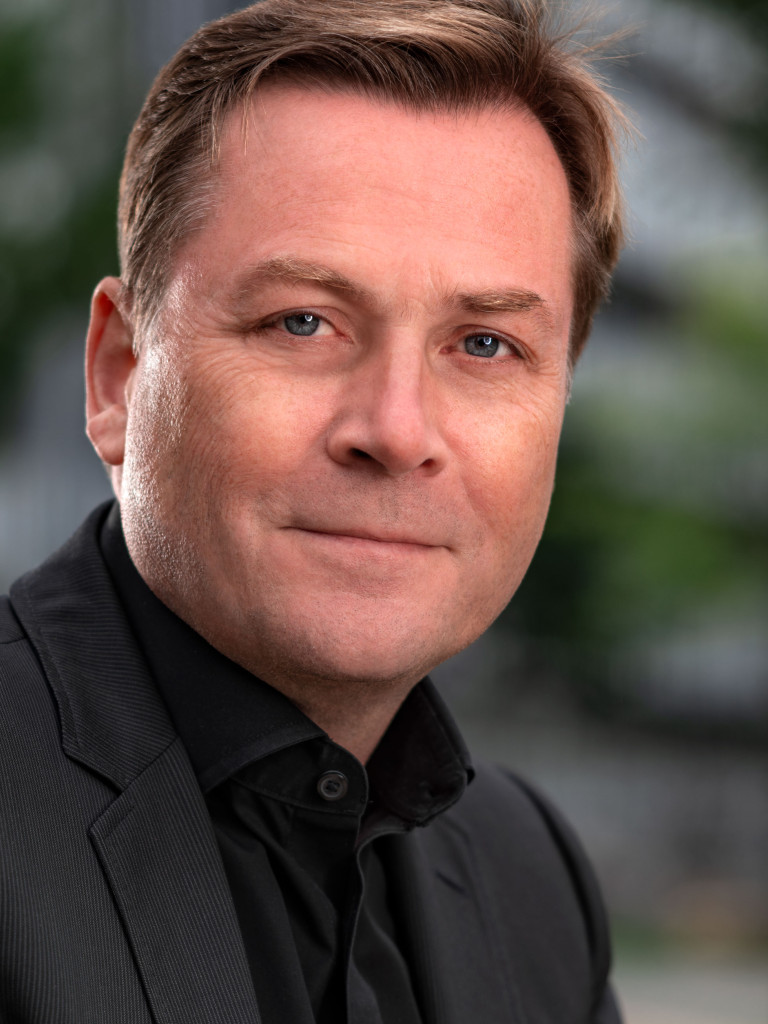
Oliver Günther has been President of the University of Potsdam since 2012. From 1993 to 2011 he was Professor of Information Systems at Humboldt University in Berlin, his research focusing on IT strategy, IT efficiency, and IT privacy/security. He holds a Diploma in industrial engineering from the University of Karlsruhe and M.S. and Ph.D. degrees in computer science from UC Berkeley.

Comments are closed.