Between Formal Systems and Belief Systems: A Journey Through Complexity. A Conversation with Stéphane Grumbach.
Q1. You’ve moved from working on query languages to international relations, diplomacy, and social sciences. What prompted that shift? Was it a gradual evolution or did something specific make you feel that technology research alone wasn’t enough?
SG: I have always been interested in both the formal sciences, which can be seen as universal, and, on the other hand, in the diversity of cultural arrangements that exist across the world. My academic background combines mathematics and Chinese studies: I completed both master’s degrees in parallel—something that was officially not permitted, but made possible at the time because the university’s computer system was still under development.
Initially, I hesitated between pursuing a diplomatic career and a scientific one. Science ultimately seemed to offer greater intellectual freedom. I therefore joined Inria, where I focused on database research, temporarily setting aside my broader cultural and geopolitical interests. Later, however, when the president of Inria asked me to lead the international relations department, I accepted the position, as it allowed me to reconnect with those other passions.
This role naturally led me to the French Embassy in Beijing, where I served as science counsellor. Living in China had been a long-standing aspiration of mine, dating back to high school, when I first began studying Chinese.
Over the years, through sustained engagement with international scientific cooperation, a new set of questions gradually came to the forefront: how the emergence of digital plat- forms would transform relations between nations, and in particular how they would reshape asymmetries of information, coordination, and power. This shift in focus thus emerged not as a rupture, but as a natural continuation of my earlier concerns.
Q2. In my reflections on how technology conversations have changed over 20 years (*) — I observed that we’ve moved from asking ”Can we build this?” to ”Should we build this?” and ”What happens when we do?” When you reflect on your own career trajectory, when did you personally start wrestling with these deeper questions about responsibility and consequence rather than just technical possibility?
SG: I began thinking seriously about these issues during my time as a diplomat. At that stage, I had not yet connected them to my earlier research in databases or information systems. Moreover, these questions were far less visible in academia than they are today. Scholars in the social sciences generally had limited familiarity with digital technologies, while computer scientists tended to focus primarily on technical performance, with little attention to social or political implications. This situation has since evolved significantly.
Nevertheless, important challenges remain. Research and development in many domains pursue clearly defined objectives, improving health outcomes, strengthening food systems, enhancing energy production, or reducing negative externalities such as environmental impact. In the digital domain, by contrast, the underlying purpose has often been less clear. Initially, digital technologies primarily aimed to optimize information systems supporting existing societal functions. From the mid-1990s onward, however, new digital systems emerged that did not simply improve existing structures but instead introduced entirely new ways of organizing and orchestrating markets at a global scale.
These systems are profoundly disruptive. They enable extraordinary new capabilities, yet at the same time they generate significant uncertainty, debate, and controversy. Their societal role, normative orientation, and long-term consequences remain open questions, making them both powerful and deeply ambivalent objects of inquiry.
Q3. You noted that while technology has changed, the world more globally has also trans- formed—climate change triggers anxiety, birth rates are declining, and we’re at the dawn of war. How do these broader shifts shape the way we should be thinking about and discussing technology today compared to 20 years ago?
SG: A quarter of a century ago, most scientists interacted in what appeared to be a largely borderless world. They met freely at international conferences, exchanged ideas with colleagues from academia and industry alike, and paid little attention to national origins. In the West, this openness was accompanied by a widespread sense that history had reached its endpoint, a belief in the inevitable convergence of nations toward a shared political and institutional model. This projection was deeply na ̈ıve, reflecting the illusion that we could somehow suspend historical dynamics, as if our generation had become wiser than those before it.
Having been shaped by two cultural spheres, Western Europe on the one hand, and East Asia on the other, I never fully shared this belief in an irreversible unifying trajectory, nor in the vision of perpetual peace that accompanied it, however desirable such an outcome might be. On the contrary, I have long been concerned that humanity’s inability to address environmental challenges, combined with the structural inadequacy of nation-states to manage them collectively, would create conditions of increasing disorder. In such a context, escalating tensions, conflict, and even the risk of global war would become not anomalies, but plausible outcomes. Unfortunately, recent developments do little to contradict these early concerns.
Q4. Looking back at your work on databases and query languages, and now your perspective from social sciences and diplomacy—what insights from your technical background have proven most valuable in understanding geopolitics and international relations? Are there unexpected connections?
SG: That is a very relevant question. In fact, I have spent a great deal of time reflecting on the sequence of seemingly disparate activities that have shaped my professional life—from initially engaging in highly theoretical research in computer science to later working on the management of international relations, particularly between Europe and China. Although these domains may appear disconnected at first glance, they have in fact been driven by a constant and coherent fascination with complexity. It is therefore with great pleasure that I joined the Complex Systems Institute (IXXI) in Lyon more than a decade ago, where these threads could finally converge.
My early work on query languages focused on very restricted classes of formal languages. These languages had limited expressive power—many functions simply could not be formulated within them—but they benefited from low computational complexity, making them efficient to compute. A particularly striking result of this line of research was the establishment of mathematical equivalences between definability and complexity: between what can be expressed in a formal system and how difficult it is to verify. In other words, there is a fundamental relationship between what can be said and the cost of deciding whether it is true.
In this respect, geopolitics is not as different as it might seem. What can be conceived or articulated within a given political context is often severely constrained. It has less to do with objective facts than with belief systems and narratives, despite our tendency to assume otherwise. When two countries go to war, for example, each side claims to hold the truth—or, more precisely, each operates within a truth that is irreconcilable with the other. What is cognitively accessible to a political system is thus bounded by its belief structures, which function much like an implicit axiomatics: largely unquestioned, deeply internalized, and often unconscious.
A further dimension of complexity is equally central to my thinking. Political systems can be understood as complex adaptive systems. They are dynamic, continuously striving to maintain internal order, often by externalizing disorder, and they evolve through strong path dependencies. When such systems become dysfunctional, they fail to manage their growing internal complexity. Disorder accumulates, adaptive capacity diminishes, and the system may eventually become trapped in destructive feedback loops. At that point, decline is not the result of a single decision, but of a systemic inability to cope with complexity itself.
Q5. If you were advising a young researcher today who’s passionate about both technology and its societal implications, what would you tell them? Should they stay within computer science, move toward social sciences as you did, or is there a different path that makes sense for this moment we’re in?
SG: I see two major issues at stake. The first concerns the current organization of academic disciplines, and the second relates to the rapid emergence of increasingly powerful foundational models and generative systems.
Scientific institutions today struggle to genuinely foster interdisciplinary research. Most researchers operate within extremely narrow sub-disciplines, often several layers deep, leaving little time or cognitive space to step back and gain broader perspectives. This situation is not a matter of individual responsibility. The scientific corpus has grown exponentially, while human cognitive capacity has remained essentially constant. As a result, the fraction of global knowledge that any single individual can master has effectively shrunk to an epsilon. In this context, the often-invoked “T-shaped” profile becomes a crucial objective: deep expertise in one domain combined with a broad general culture that allows meaningful dialogue across fields.
The second issue is the transformative impact of generative systems on learning, knowledge production, and our ways of understanding the world. We are currently in a critical transitional period. Researchers who completed their education before the widespread availability of these tools learned to perform intellectual tasks independently and are now discovering how to augment their capabilities with them. Educational systems will eventually adapt, training students in an environment where such tools are natively integrated. However, the current generation of students risks being caught in an ill-adapted system: one that neither fully acknowledges the presence of generative tools nor teaches how to engage with them productively. In such a context, there is a danger that these systems are used as substitutes for intellectual effort rather than as partners in a process of co-evolution and deeper understanding.
Qx. Anything you wish to add?
SG: I believe we are living through a historical moment marked by a surge in complexity. All knowledge-intensive activities are undergoing, or will soon undergo, radical transformation—from learning and research to governance itself. In this context, cybernetic logics must evolve: from rigid, imperative forms of control toward more subtle modes of intervention focused on shaping feedback loops; from an emphasis on prediction toward a capacity for continuous adaptation to volatility; and from a narrow concern limited to humans, institutions, or nation-states toward a more holistic and inclusive vision encompassing all stakeholders of a planetary system.
My sensitivity to these issues clearly stems from the intersection of two intellectual trajectories: on the one hand, formal sciences and complexity theory; on the other, sustained engagement with foreign affairs. It is at this intersection that the limits of traditional models of control become apparent, and where new forms of collective intelligence and governance must be imagined.
(*) Twenty Years of Conversations: Reflections on Technology and Society
ODBMS Industry Watch, November 25, 2025
By Roberto V. Zicari, Editor, ODBMS.org
……………………………………….
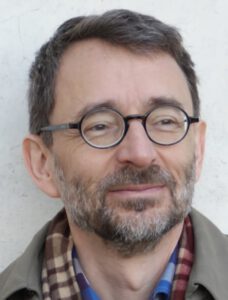
Stéphane Grumbach, senior scientist at Inria, the French National Institute for Research in Digital Science and Technology, is a specialist of data systems. He has worked on theoretical issues in informatics regarding the processing of complex data types, such as spatial, statistical, as well as biological, and has designed the first compression algorithm, Biocompress, for DNA sequences. His interests have evolved to more global questions related to the impact of digital systems on society, such as the geopolitical implications of the digital, which triggers new imbalances and asymmetries between nations ; the contrasting visions promoted in different regions of the world, such as North America, East Asia and Europe ; the emergence of a control society, while human societies are facing the challenges of a more constrained global environment ; and more generally the contemporaneity of the anthropocene and the digital revolution.
He joined IXXI, the Complex Systems Institute at ENS Lyon, in 2014, is affiliated with the GEODE Project on the Geopolitics of the Datasphere, and works in collaboration with the Research Institute on Humanity and Nature, RIHN in Kyoto. He teaches Digital Economy in SciencesPo Paris.
He has been strongly involved in international relations, has spent eight years in China, first as science counsellor in the French Embassy, and then in the Chinese Academy of Sciences, where he headed the Sino-European IT Lab, LIAMA.